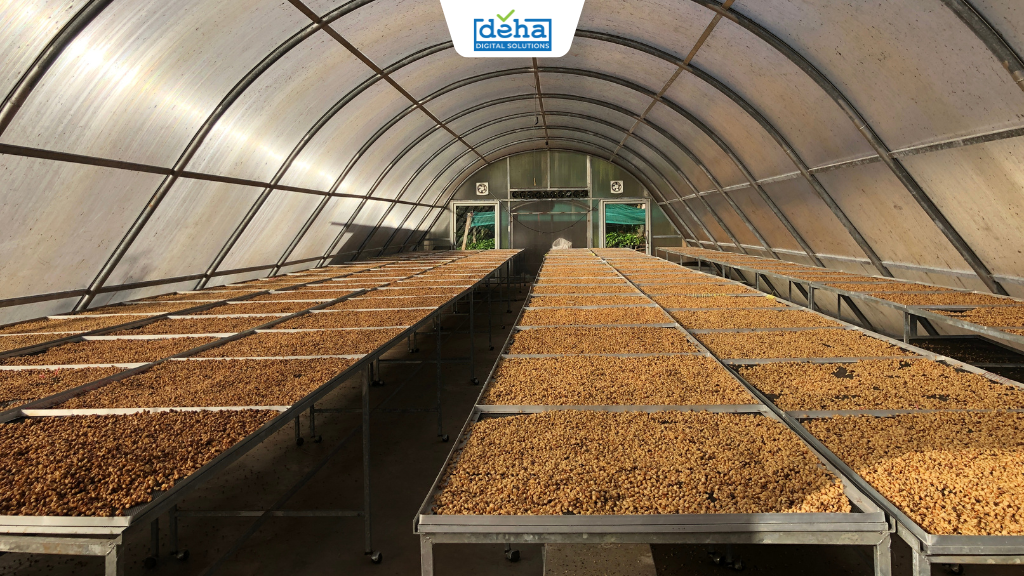
In agricultural product processing (fruits, grains, seeds, vegetables, herbs…), the drying stage directly affects:
-
Final product quality
-
Loss rate
-
Color, crispness, and flavor
-
Commercial value
-
Export potential
-
Energy costs
However, most factories today still use semi-manual drying methods, which carry significant risks. An intelligent drying monitoring and control system helps automate, standardize, and optimize the entire process.
Challenges in managing drying systems
-
Inaccurate control of temperature and humidity
Dryers are often operated based on workers’ perception → prone to errors. Even a few degrees or 5–10% difference in humidity can noticeably affect quality. -
Customer concerns
-
Inconsistent quality between batches: batch 1 looks perfect, batch 2 too dark, batch 3 over-dried… due to inability to control drying requirements for each type of raw material.
-
-
High energy waste
-
Dryers consume large amounts of electricity/fuel.
-
Lack of automatic optimization → high energy costs, increased production expenses.
-
-
Dependence on worker skill
Workers must:-
Monitor the machine
-
Rotate trays
-
Check moisture levels based on experience
-
Adjust temperature manually → labor-intensive and unstable results.
-
-
No data for traceability & improvement
-
Drying time, stage temperature, humidity charts, and alerts are often not recorded → impossible to identify the cause if the product is damaged.
-
-
No early warning for dryer malfunctions
-
Overheating, excess humidity, fan failures, or sensor errors can ruin the entire batch if not detected in time, causing significant losses.
-
-
Non-compliance with export requirements
-
Exported agricultural products (EU, US, Japan…) require drying logs to prove:
-
Products are free from mold due to under-drying
-
Proper heat treatment
-
Final moisture level meets standards
-
-
Without data → audits fail.
-
Overall Solution
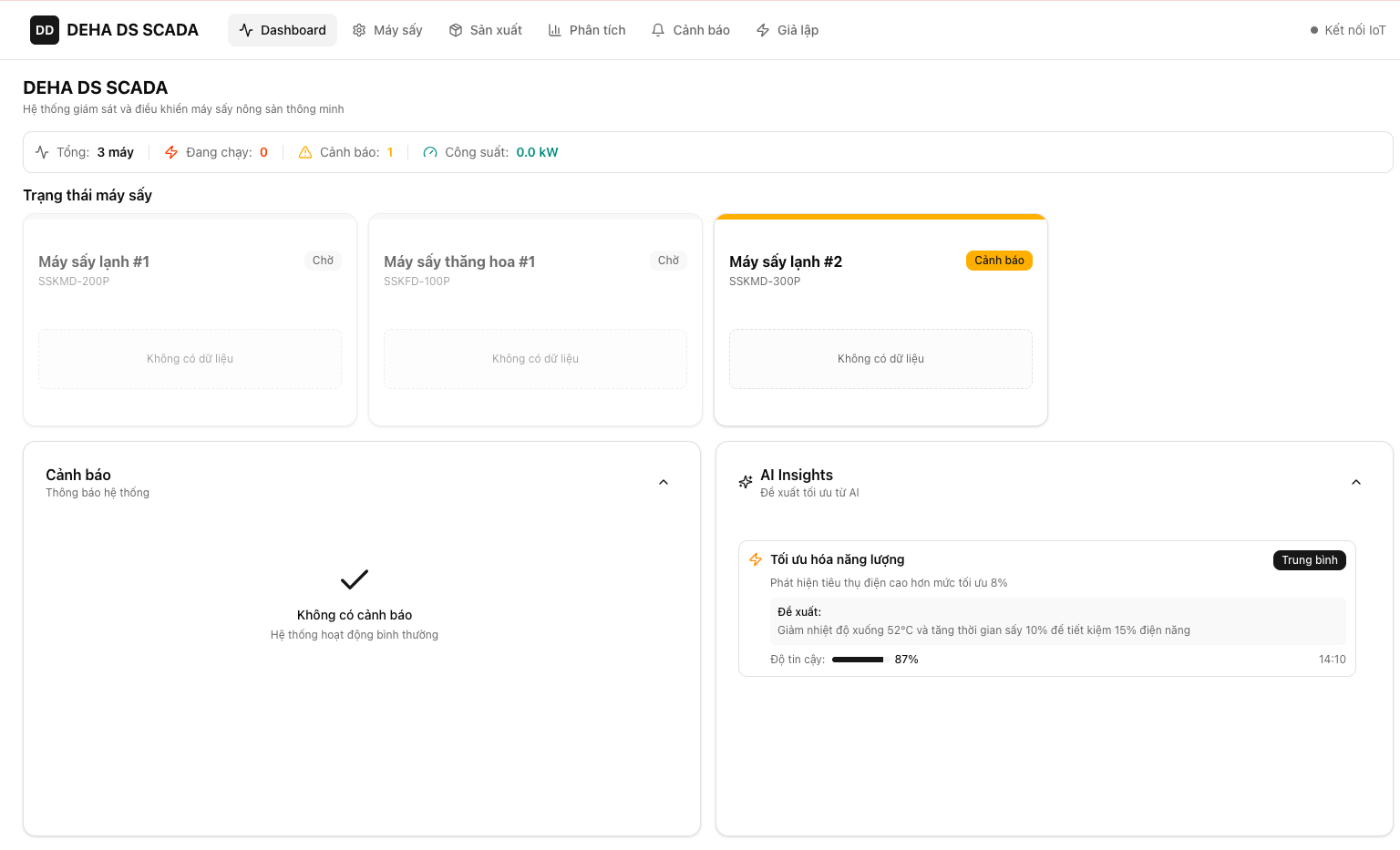
Dashboard
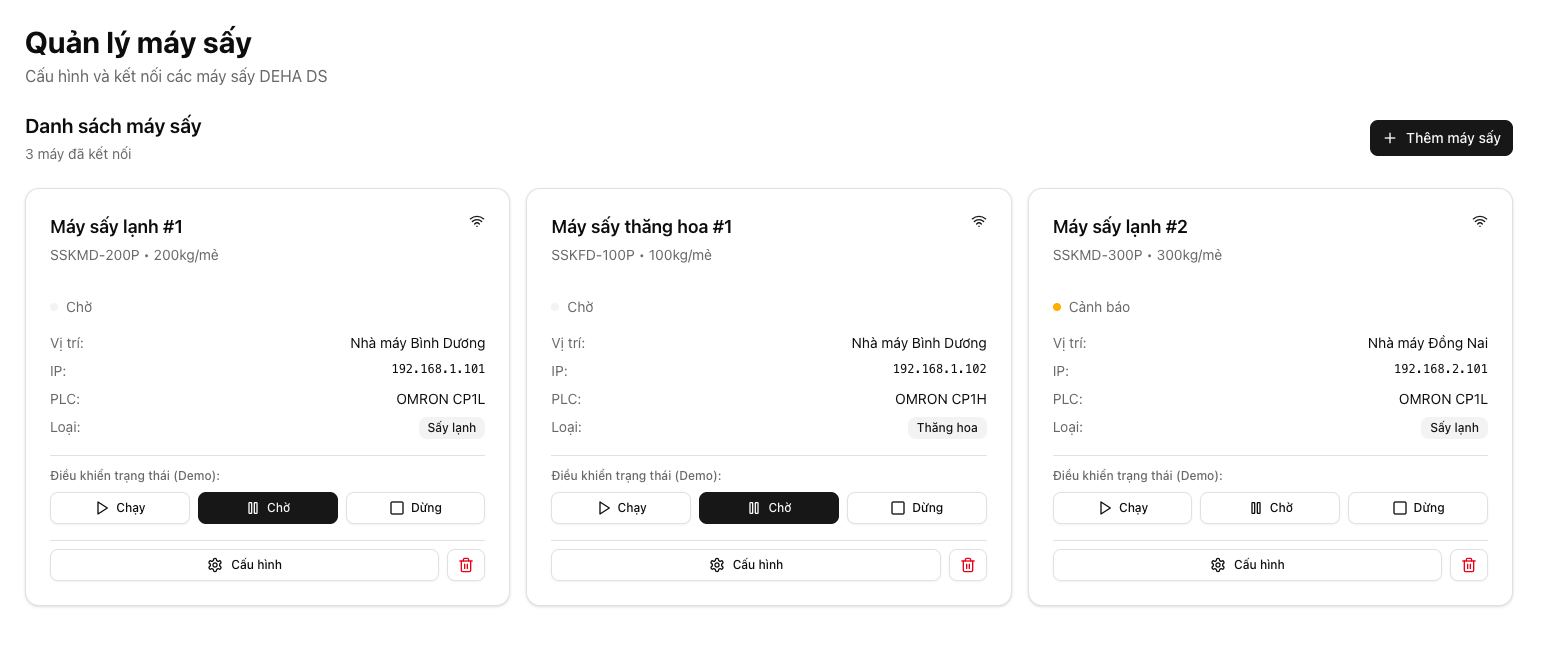
Manage Dryers
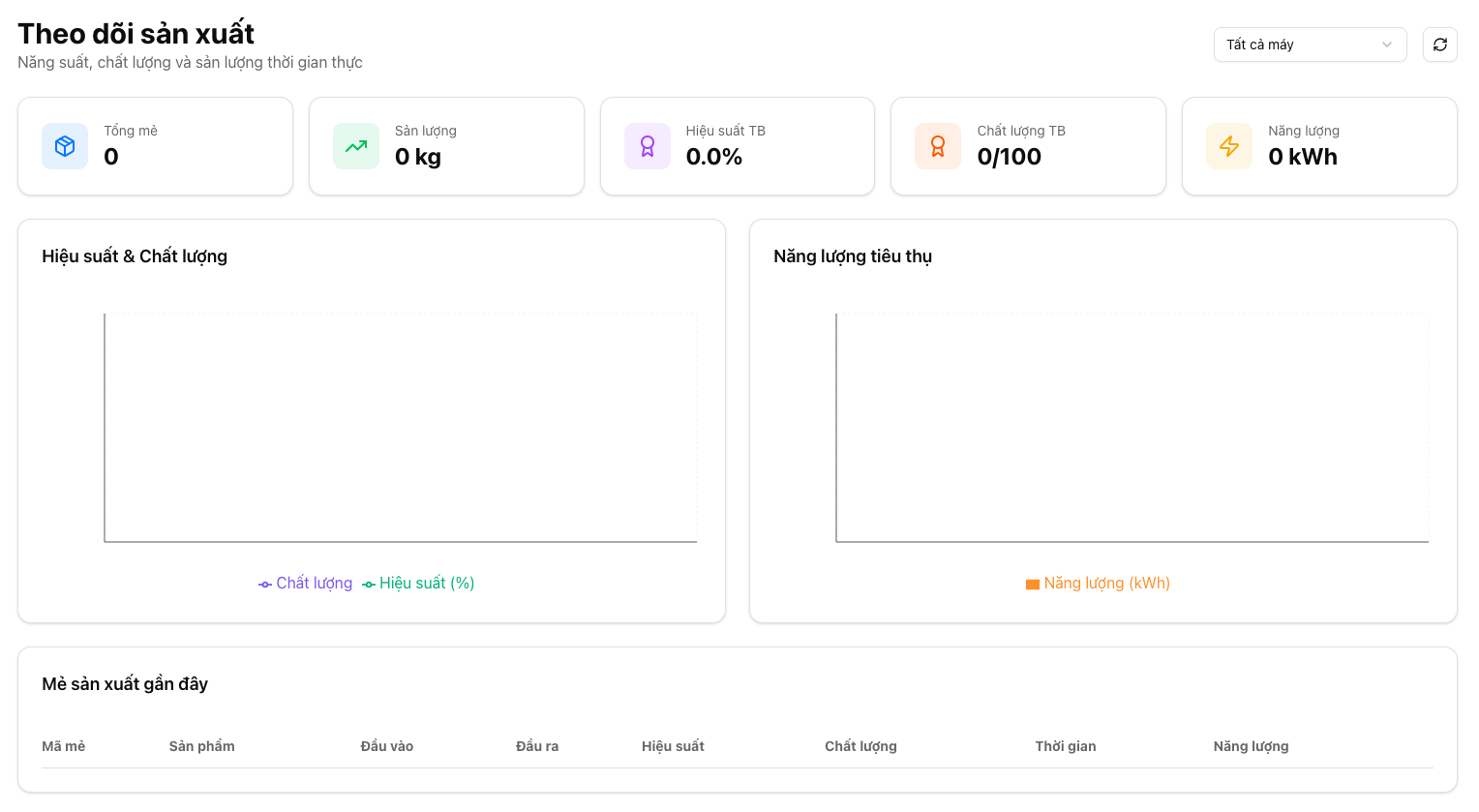
Monitor Productivity
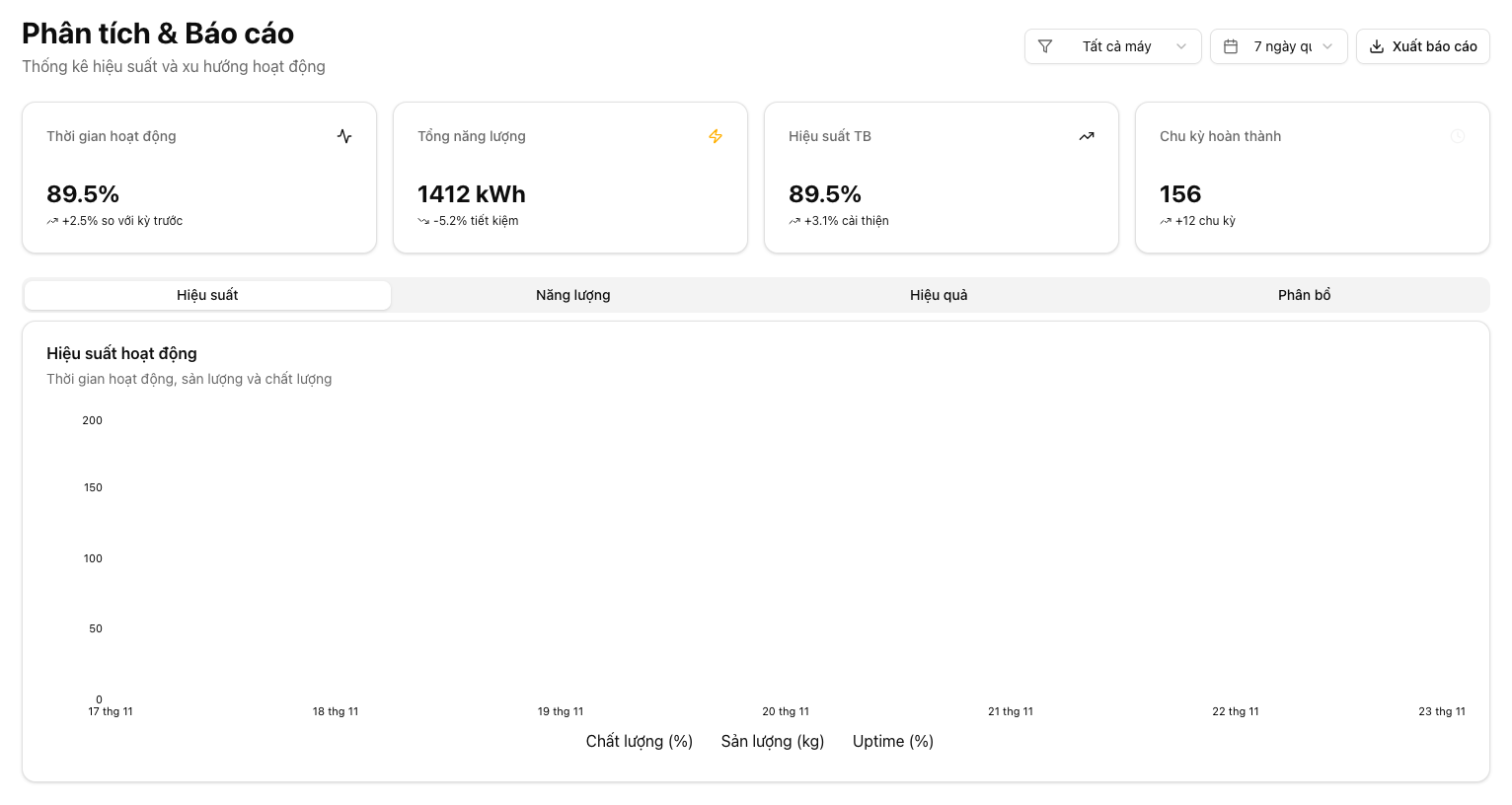
Analyze and Report
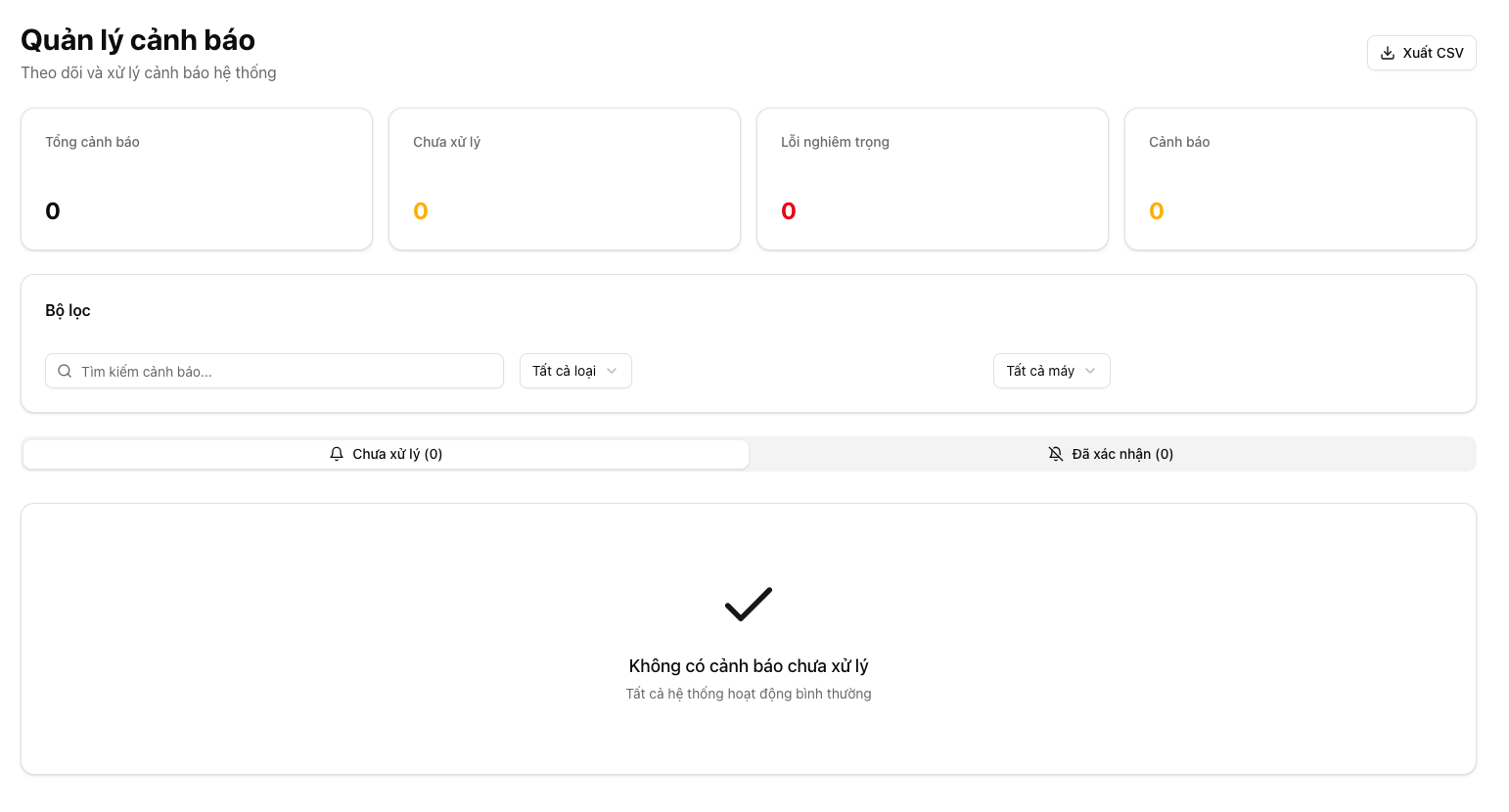
Alert Management
Simulation and Testing